The digital advertising ecosystem operates at a velocity that is difficult to comprehend, with millions of automated transactions occurring every second. At the center of this frantic pace lies the bidstream – the high-speed transit system of the internet. This guide serves as an authoritative resource on bidstream data, moving beyond simple definitions to explore how this invisible flow powers global programmatic advertising, provides actionable business intelligence, and navigates the evolving landscape of user privacy.
Understanding Bidstream Data
To understand the modern internet, one must understand the bidstream. Every time you refresh a webpage or open an app, a complex, real-time auction occurs before the content even finishes loading. This process involves a sophisticated exchange of information that determines which brand reaches which consumer at the precise moment of interest.
A Technical Definition of the Bidstream
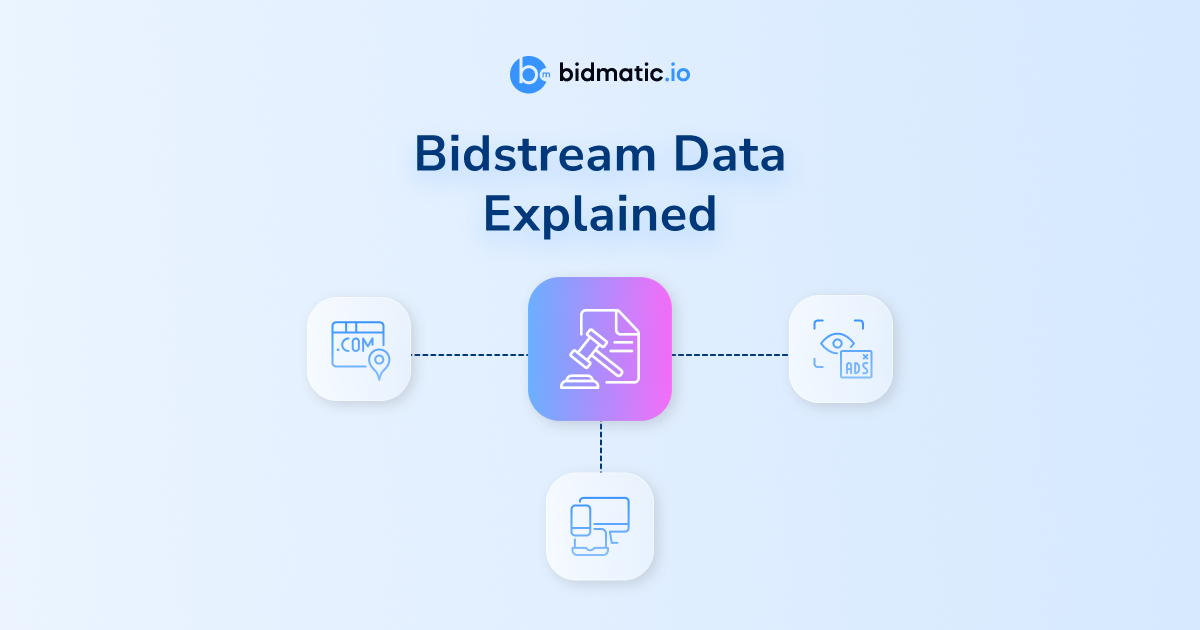
The bidstream is the continuous flow of bid requests sent from publishers to potential buyers during a programmatic auction. When a user visits a site, the publisher’s supply-side technology broadcasts an invitation to purchase that specific ad slot. This invitation contains a wealth of metadata about the user, the environment, and the context, allowing buyers to make informed, millisecond decisions.
Why Bidstream Data is the Backbone of Real-Time Bidding (RTB)
Real-time bidding (RTB) relies on the speed and depth of the bidstream to maintain market efficiency. Without this standardized data feed, advertisers would have no way to verify where their budget is going, and publishers would struggle to monetize their inventory effectively. The bidstream transforms raw, unorganized traffic into a structured, commoditized marketplace where value is determined by supply and demand in real time.
How the Bidstream Works?
The OpenRTB protocol acts as the universal language of the programmatic world. Developed by the Interactive Advertising Bureau (IAB), this standard ensures that every player in the ecosystem – from SSPs to DSPs – speaks the same dialect. It defines exactly how a bid request should be formatted, ensuring that technical data like device type or ad format is interpreted correctly by the buying platform.
From User Visit to Ad Impression
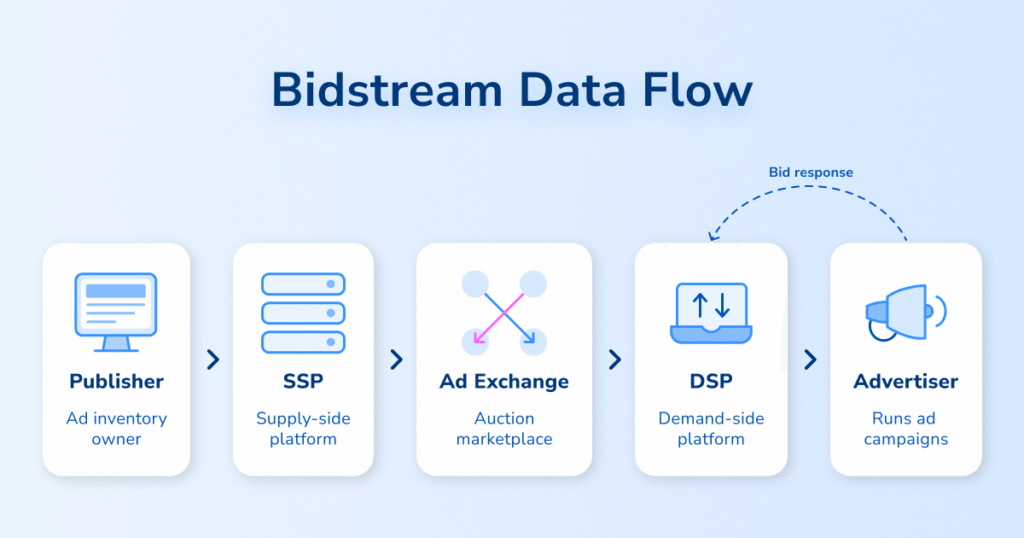
The millisecond journey of a bid request: from the initial page load to the final ad impression via Real-Time Bidding (RTB).
When a user visits a website, the publisher’s ad server triggers a request to an ad exchange. The exchange then broadcasts this request to multiple demand-side platforms (DSPs). These platforms analyze the request against their existing campaigns, place a bid if the user fits the target audience, and the highest bidder wins the ad impression. All of this happens in under 100 milliseconds.
The Exchange of Information Between SSPs and DSPs
Supply-Side Platforms (SSPs) represent the publisher, seeking the highest possible price for their inventory. Conversely, DSPs represent the advertiser, looking for the most efficient path to their target audience. The bidstream is the bridge between these two entities, facilitating the rapid transfer of intent and inventory signals required for a successful transaction.
What Data Is Actually Collected?
A bid request is a dense packet of metadata. It is not just about the ad unit; it is a snapshot of the user’s digital footprint at that specific moment.
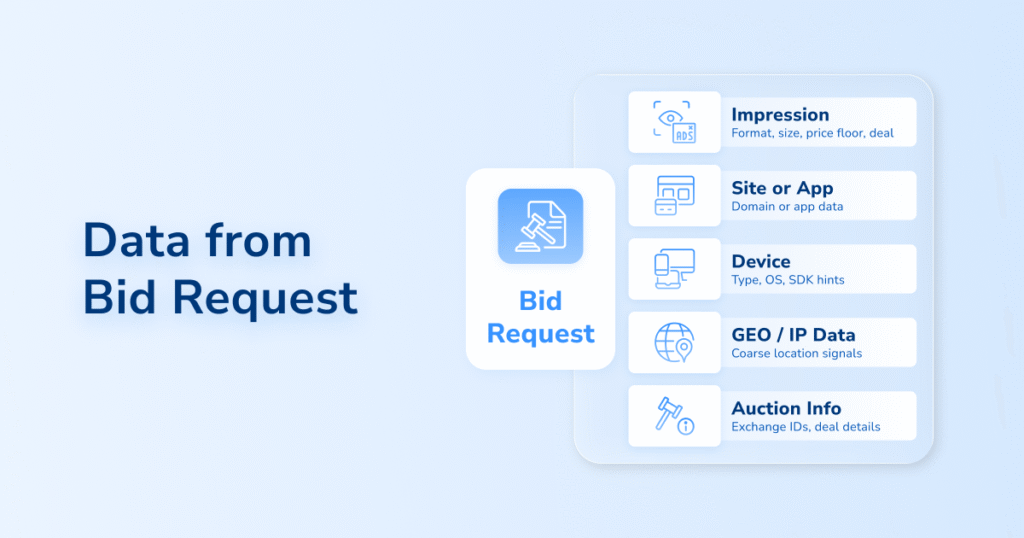
Device Details and Technical Properties
Every request includes granular device data. This includes the manufacturer, model, browser type, and even the operating system version. For an advertiser, knowing the device type is crucial for creative optimization; for instance, a full-screen video ad performs differently on a tablet than on a mobile device.
Geolocation Information and IP Address Geolocation
Location data is a primary filter for targeting. By parsing IP addresses and GPS coordinates where available, advertisers can localize their messaging. This allows for hyper-relevant campaigns, such as promoting a local retail store to users within a specific neighborhood radius.
Ad Specifications: Ad Units, Formats, and Viewability
The request specifies exactly what is for sale. It defines the dimensions of the ad units, the media type (display, video, or native), and metadata related to the expected viewability of the ad impression. This allows the buyer to bid appropriately based on whether the slot is “above the fold” or tucked away at the bottom of a page.
Content Metadata and Publisher URLs
Transparency is provided through content metadata, which includes the publisher URL or app bundle ID. This informs the advertiser about the environment in which their brand will appear, which is vital for maintaining brand safety and ensuring that the content aligns with the advertiser’s core values.
How the Industry Leverages Bidstream Data
For Advertisers: Identifying Intent Signals and Target Audiences
Advertisers use the bidstream to identify high-intent audiences in real-time. By analyzing the contextual signals surrounding the user, they can predict purchasing behavior even before a user clicks an ad. This allows for the refinement of targeting strategies based on what a user is actively reading or viewing.
For Publishers: Managing Inventory Pricing and Floor Prices
Publishers leverage bidstream insights to optimize yield. By analyzing historical bid data, they can set strategic floor prices that protect their margins while ensuring their inventory remains competitive enough to attract high-quality demand.
For Ad Tech Platforms: Powering Bidding Algorithms and Analytics
DSP algorithms ingest billions of data points from the bidstream to train their bidding models. This “big data” approach allows platforms to predict the win rate of an impression and the likelihood of a conversion, constantly refining the machine-learning models that fuel modern programmatic efficiency.
The “Data Hygiene” Challenge: Quality vs. Noise
The bidstream is not immune to bad actors. Maintaining a clean supply chain is the single most important task for programmatic professionals.
Identifying and Preventing Declaration Fraud
Declaration fraud occurs when a publisher misrepresents their site or app to inflate inventory value. Effective buyers use specialized tools to verify that the domain and app store IDs reported in the bidstream match the reality of the traffic.
The Importance of Brand Safety in the Bidstream
Brand safety is paramount. The industry has developed robust technologies to scan the bidstream for inappropriate or harmful content, allowing advertisers to blacklist certain sites or categories instantly.
Supply Chain Standards: Implementing ads.txt and sellers.json
Standards like ads.txt and sellers.json provide critical transparency. They act as a “chain of custody” for digital inventory, ensuring that advertisers only buy from authorized sellers, effectively cutting out unauthorized resellers and fraudulent inventory sources.
Moving Beyond Cached Location Data and Inaccurate User Signals
Relying on outdated location data or fragmented user IDs can lead to wasted spend. Advanced platforms now utilize sophisticated filtering to discard “noisy” data, ensuring that bidding is based on the most accurate and recent signals available.
The Privacy Landscape: Navigating GDPR, CCPA, and PII
Privacy is the defining challenge of our era. The bidstream must evolve to balance effective targeting with strict regulatory compliance.
The Definition of Personally Identifiable Information in the Bidstream
Personally Identifiable Information (PII) is any data that can identify an individual. The industry is moving toward strict de-identification practices, stripping bid requests of raw identifiers to ensure that programmatic activity does not violate user privacy expectations.
Compliance and Consent
The IAB’s Transparency and Consent Framework (TCF) is the standard for managing user consent across the programmatic supply chain. It ensures that whenever personal data is processed, the user’s preferences are respected and communicated to all downstream partners.
Anonymization vs. Data Enrichment
The future lies in data enrichment that preserves anonymity. By aggregating user behavior into interest cohorts rather than tracking individual profiles, advertisers can maintain targeting effectiveness while operating entirely within the boundaries of GDPR and CCPA.
The Transition to a Cookie-less Environment
The era of the third-party cookie is ending. This shift is driving innovation in how we understand and utilize bidstream data.
The Impact of the “Cookiepocalypse” on Traditional Tracking
The phase-out of third-party cookies forces a radical change in how attribution and targeting are calculated. Relying on legacy tracking methods is no longer a viable long-term strategy for sustained growth.
Beyond Third-Party Cookies: Unified ID 2.0 and ID Graphs
Solutions like Unified ID 2.0 (UID2) are emerging to replace cookies. By utilizing hashed, encrypted identifiers, these solutions allow for cross-platform identity resolution without exposing raw user data, maintaining the efficiency of the bidstream in a privacy-first world.
Final Thoughts
Bidstream data is far more than a technical artifact of programmatic advertising; it is the fundamental infrastructure upon which modern digital commerce is built. As we transition away from the reliance on third-party cookies, the importance of this data will only increase. By prioritizing transparency, embracing privacy-centric identity solutions, and demanding rigorous data hygiene, advertisers and publishers alike can ensure the longevity of this ecosystem. The future belongs to those who view the bidstream not as a black box, but as a transparent, high-value asset that powers smarter, more ethical, and more effective market connections. Implementing audited stacks and moving toward first-party, authenticated data will be the defining markers of success in the coming years.